
Introduction: Understanding Life Insurance in 2025
The life insurance landscape in 2025 is characterized by increased consumer awareness, technological advancements, and evolving economic conditions. While traditional policies remain relevant, we’re seeing a rise in personalized options, digital platforms for application and management, and a greater emphasis on value-added services beyond basic death benefits. Understanding the different types of policies and their suitability for individual needs is crucial for making informed decisions.
The primary types of life insurance policies available in 2025 include term life insurance, whole life insurance, universal life insurance, and variable universal life insurance. Each offers distinct features and benefits, catering to various financial goals and risk tolerances. Choosing the right policy depends heavily on factors like age, health, financial situation, and long-term objectives.
Life insurance proves invaluable in numerous scenarios. For example, it provides financial security for dependents in the event of the policyholder’s death, covering expenses like mortgage payments, children’s education, and ongoing living costs. It can also serve as a crucial component of estate planning, ensuring a smooth transfer of assets and minimizing potential tax burdens. Furthermore, some policies offer cash value accumulation that can be accessed for specific financial needs during the policyholder’s lifetime.
Types of Life Insurance Policies
The following table summarizes the key features of the major life insurance policy types:
| Policy Type | Pros | Cons | Best Suited For |
|---|---|---|---|
| Term Life Insurance | Affordable premiums, simple structure, straightforward coverage. | Coverage ends after a specific term; no cash value accumulation. | Individuals needing temporary coverage, such as those with young families or significant debt. |
| Whole Life Insurance | Lifetime coverage, cash value accumulation, potential tax advantages. | Higher premiums compared to term life insurance, cash value growth may be slow. | Individuals seeking permanent coverage and long-term wealth building. |
| Universal Life Insurance | Flexible premiums, adjustable death benefit, cash value accumulation. | More complex than term life insurance, potential for higher costs if not managed carefully. | Individuals who want flexibility in their premium payments and death benefit amount. |
| Variable Universal Life Insurance | Flexible premiums, adjustable death benefit, cash value growth potential through investment options. | Higher risk due to investment component, complex structure, potential for losses in investment value. | Individuals comfortable with investment risk and seeking higher potential returns on their cash value. |
Situations Where Life Insurance is Crucial
Life insurance is particularly crucial in situations involving significant financial responsibilities. For example, a young couple with a mortgage and young children would benefit greatly from life insurance to ensure financial stability for their family in the event of one or both parents’ death. Similarly, business owners often utilize life insurance to protect their businesses from financial hardship upon the death of a key employee or partner. The death benefit can be used to cover business debts, maintain operations, and ensure a smooth transition. Another example is providing for elderly parents who rely on financial support from their children. A life insurance policy can provide a financial cushion to cover their ongoing care needs.
Factors Influencing Policy Selection
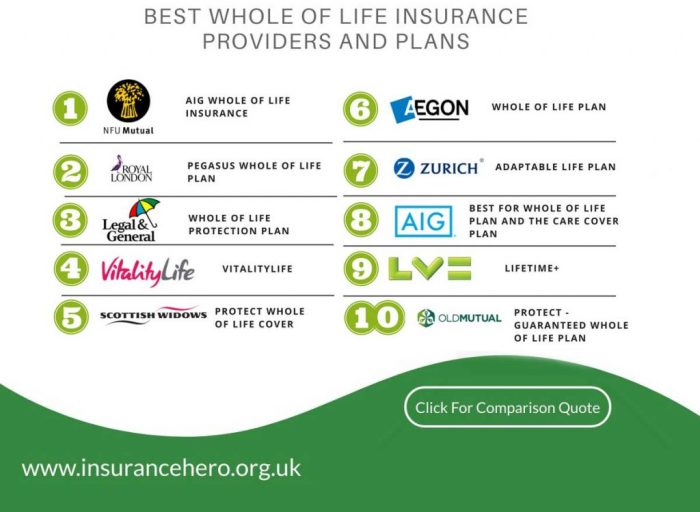
Choosing the right life insurance policy in 2025 requires careful consideration of various factors. The ideal policy isn’t a one-size-fits-all solution; it depends heavily on individual circumstances, risk profiles, and long-term financial objectives. A thorough assessment of these elements is crucial for securing adequate coverage at a manageable cost.
Individual Needs and Risk Assessment
Selecting a life insurance policy necessitates a comprehensive understanding of personal needs and a realistic assessment of risk. This involves evaluating the financial responsibilities you wish to protect, such as mortgage payments, children’s education, or retirement income. A thorough risk assessment considers factors like your health, occupation, and lifestyle, all of which influence the likelihood of a claim and, consequently, the premium you’ll pay. For instance, a high-risk occupation might necessitate a higher premium for a comparable coverage amount compared to a lower-risk profession. Furthermore, pre-existing health conditions can significantly impact policy eligibility and cost. Failing to accurately assess these factors could result in inadequate coverage or unnecessarily high premiums.
Age, Health, and Financial Goals
Age, health status, and financial objectives are interconnected factors significantly influencing policy selection. Younger individuals typically qualify for lower premiums due to their statistically lower risk of mortality. However, their longer time horizon may justify choosing a policy with a higher cash value component for long-term savings or investment potential. Conversely, older individuals might prioritize a policy with a lower premium, even if the coverage amount is slightly reduced, to address immediate financial needs. Health significantly affects premium calculations; individuals with pre-existing conditions might face higher premiums or even be denied coverage unless they opt for specialized policies. Financial goals, such as providing for dependents or funding retirement, dictate the necessary coverage amount and policy type. For example, a young family with a mortgage might need a substantial term life insurance policy, while an individual nearing retirement might prioritize a policy with a cash value component for supplementary income.
Premium Costs Associated with Different Policy Types
Different life insurance policy types carry varying premium structures. Term life insurance, offering coverage for a specific period, typically has the lowest premiums. However, coverage expires at the end of the term, requiring renewal or purchase of a new policy. Whole life insurance, offering lifelong coverage, generally has higher premiums due to the lifetime guarantee. Universal life and variable universal life insurance policies offer flexibility in premium payments and death benefits but often come with higher fees and investment risk. The premium costs also vary based on factors like the coverage amount, the insured’s age and health, and the insurer’s underwriting standards. For instance, a $500,000 term life insurance policy for a 30-year-old healthy individual will typically have a significantly lower premium than a similar policy for a 60-year-old with pre-existing health conditions.
Key Factors When Comparing Insurance Quotes
When comparing quotes from different insurance providers, several key factors warrant attention. These include the policy’s coverage amount, premium cost, policy length (for term life), cash value accumulation (for permanent life), and the insurer’s financial stability and reputation. It’s crucial to compare apples to apples, ensuring that the policies being compared offer similar coverage terms and features. Additionally, examining the insurer’s financial strength rating, provided by independent agencies like A.M. Best, helps assess the company’s ability to pay claims. Finally, understanding the policy’s exclusions and limitations is vital to avoid unexpected complications in the event of a claim. For example, some policies might exclude coverage for specific high-risk activities or pre-existing conditions. Thorough comparison shopping and careful policy review are crucial for securing optimal life insurance coverage at a reasonable cost.
Term Life Insurance Policies
Term life insurance provides coverage for a specified period, or term, after which the policy expires. Unlike permanent life insurance, it doesn’t build cash value and is generally more affordable, making it a popular choice for many. Understanding the characteristics of term life insurance is crucial for making an informed decision about your financial protection.
Term life insurance policies offer straightforward coverage. The policyholder pays premiums for a set period, and if the insured dies during that term, the beneficiaries receive the death benefit. If the insured survives the term, the policy simply expires, and no further benefits are paid. Renewal options vary, with some policies allowing for renewal at a higher premium, while others do not offer this possibility. Conversion options may also be available, allowing the policyholder to convert the term policy to a permanent policy, typically at a higher premium.
Term Life Insurance Suitability
Term life insurance is particularly well-suited for specific life stages and financial goals. For example, individuals with significant debt, such as a mortgage, may find a term life policy an effective and cost-efficient way to protect their family’s financial future in the event of their untimely death. Young families with children may also prioritize a term life policy to ensure their children’s education and living expenses are covered. Additionally, those who need coverage for a specific period, such as the duration of a loan, will find term life insurance a practical solution.
Term Lengths and Premium Costs
The length of the term significantly impacts the premium cost. Generally, longer terms result in higher premiums, reflecting the increased risk the insurance company assumes. Shorter terms, conversely, typically come with lower premiums. The following table illustrates this relationship, using hypothetical examples for illustrative purposes. Actual premiums vary based on several factors, including age, health, and the insurance company.
| Term Length | Premium Cost (Annual, Example) | Coverage Amount (Example) | Suitable For |
|---|---|---|---|
| 10 Years | $500 | $500,000 | Paying off a mortgage, covering short-term financial obligations. |
| 20 Years | $750 | $500,000 | Raising young children, long-term financial security. |
| 30 Years | $1000 | $500,000 | Long-term financial protection, retirement planning. |
| Until Age 65 | $1200 | $500,000 | Coverage until retirement age. |
Term Life Insurance Cost-Effectiveness Example
Consider a hypothetical scenario: John needs $500,000 in coverage for 20 years. He can choose between a 20-year term life policy with an annual premium of $750 (as per the table above) or a whole life policy with a higher, potentially constant annual premium of $2000. Over 20 years, the term policy would cost him $15,000 ($750 x 20), while the whole life policy would cost $40,000 ($2000 x 20). This example demonstrates the potential cost savings of a term life policy over a longer period, especially if the need for coverage is limited to a specific timeframe. The whole life policy, while offering lifelong coverage and cash value accumulation, may not be the most cost-effective option for everyone.
Whole Life Insurance Policies

Whole life insurance offers lifelong coverage, unlike term life insurance which covers a specific period. It’s a permanent policy that builds cash value over time, providing both a death benefit and a savings component. This makes it a complex product requiring careful consideration of its features and long-term implications.
Whole Life Insurance Features: Cash Value and Death Benefits
Whole life insurance policies accumulate cash value over the life of the policy. This cash value grows tax-deferred and can be accessed through loans or withdrawals. The death benefit, paid to your beneficiaries upon your death, remains level throughout the policy’s duration. The cash value component is funded by a portion of your premiums, and its growth depends on the policy’s interest rate, which is typically lower than market rates but provides guaranteed growth. The death benefit is typically the face value of the policy plus the accumulated cash value.
Advantages and Disadvantages of Whole Life Insurance Compared to Term Life Insurance
Whole life insurance offers several advantages over term life insurance. The lifelong coverage eliminates the need for renewal or replacement as you age. The cash value accumulation provides a savings vehicle and potential source of funds for retirement or other financial needs. However, whole life insurance is significantly more expensive than term life insurance, and the cash value growth may not outpace inflation or other investment options. Term life insurance, while providing coverage for a specified term, is far more affordable and suitable for those seeking budget-friendly coverage.
Utilizing the Cash Value Component of a Whole Life Policy
The cash value accumulated in a whole life policy can be accessed in several ways. Policyholders can borrow against the cash value, using it as collateral. Interest is charged on these loans, and failure to repay could lead to policy lapse. Alternatively, policyholders can withdraw a portion of the cash value, though this reduces the death benefit and may incur taxes and penalties depending on the policy’s terms and the policyholder’s age. The flexibility of cash value access provides a safety net for unforeseen financial emergencies, however careful planning is crucial to avoid unintended consequences.
Long-Term Cost Implications of Whole Life vs. Term Life Insurance
The long-term cost difference between whole life and term life insurance is substantial. Term life insurance offers significantly lower premiums, making it a more affordable option, especially for younger individuals. However, term life insurance requires renewal or replacement as you age, potentially leading to higher premiums or even unavailability of coverage. Whole life insurance, while expensive initially, offers lifelong coverage and cash value accumulation, but this long-term cost can significantly outweigh the benefits for some individuals.
| Policy Type | Long-Term Cost | Cash Value Accumulation | Risk Tolerance |
|---|---|---|---|
| Term Life | Lower premiums, potential for increasing costs with renewals | None | Higher; relies on sufficient savings outside of the policy |
| Whole Life | Higher premiums, consistent cost over lifetime | Guaranteed growth, tax-deferred | Lower; some financial security built into the policy |
Universal and Variable Life Insurance
Universal and variable life insurance policies offer a blend of investment and life insurance coverage, providing more flexibility than traditional whole life or term life insurance. These policies allow for adjustments in premium payments and death benefits, catering to changing financial circumstances and individual needs. Understanding their features and differences is crucial for selecting the best policy for your specific situation.
Universal life (UL) and variable life (VL) insurance are both types of permanent life insurance, meaning they provide coverage for your entire life as long as premiums are paid. However, they differ significantly in how the cash value component grows. Both offer the flexibility to adjust premium payments within certain limits, although this flexibility comes with potential risks.
Universal Life Insurance Features and Benefits
Universal life insurance offers a straightforward cash value growth mechanism. The cash value grows at a rate determined by the insurance company’s current interest rate, which is typically a relatively low, fixed rate. Policyholders can adjust their premium payments within specified ranges, making it adaptable to changing financial situations. However, insufficient premium payments may lead to the policy lapsing. A key benefit is the transparency of the interest rate, allowing for easier prediction of cash value growth. For example, if the credited interest rate is 4%, a $10,000 cash value will grow to approximately $10,400 after one year. The death benefit is typically the face value of the policy plus the accumulated cash value.
Variable Life Insurance Features and Benefits
Variable life insurance, in contrast, invests the cash value in sub-accounts similar to mutual funds. The growth potential is higher than with universal life, but it is also subject to market fluctuations. Policyholders choose how their cash value is invested across various sub-accounts, each with different levels of risk and potential return. This investment flexibility offers the potential for significant growth, but also carries the risk of losing cash value if the chosen investments perform poorly. For example, a policyholder might allocate their cash value to a stock sub-account, which could yield high returns but also potentially experience losses. The death benefit, similar to universal life, is usually the face value plus accumulated cash value.
Comparison with Whole and Term Life Insurance
Whole life insurance offers a fixed premium and death benefit, providing lifelong coverage with a guaranteed cash value growth rate. However, it lacks the flexibility of universal and variable life policies. Term life insurance, on the other hand, provides coverage for a specific period (term) at a lower premium, but offers no cash value accumulation. Choosing between these policies depends on your risk tolerance, financial goals, and need for flexibility. A young professional with a growing family might prefer the flexibility of universal life, while someone seeking maximum coverage at a low cost for a specific period might opt for term life insurance. An individual with a high-risk tolerance and long-term investment horizon might find variable life insurance attractive.
Flexibility in Premium Payments and Death Benefits
Both universal and variable life insurance offer greater flexibility than whole life insurance in terms of premium payments. Policyholders can typically increase or decrease their premiums within certain limits, allowing for adjustments based on their income and financial circumstances. This flexibility is especially beneficial during periods of financial hardship or unexpected expenses. However, lowering premiums too much could jeopardize the policy’s longevity. The death benefit can also be adjusted in some cases, though usually with limitations and potential fees. For instance, a policyholder might increase their death benefit by paying additional premiums, but this may not always be possible depending on the policy’s terms and conditions.
Situations Where Universal and Variable Life Insurance Are Preferable
Universal life insurance is preferable for individuals seeking a balance between guaranteed growth and flexibility. It’s a good option for those who want a permanent life insurance policy but don’t want to commit to a fixed premium. Variable life insurance is a better fit for individuals with a higher risk tolerance and a longer-term investment horizon, seeking potentially higher returns. This could be suitable for someone with a substantial income and the capacity to absorb potential investment losses. For example, a high-net-worth individual might choose variable life to maximize their investment returns while still securing a substantial death benefit for their heirs.
Choosing the Right Insurance Provider

Selecting the right life insurance provider is crucial for ensuring your policy offers the coverage and support you need. A poorly chosen provider can lead to difficulties with claims processing, unsatisfactory customer service, or even policy instability. Thorough research and comparison are essential steps in making an informed decision.
Finding the best life insurance provider involves considering several key factors beyond simply the price of the premium. Your choice should reflect your individual needs and risk tolerance. Understanding these factors allows you to make a confident decision that aligns with your long-term financial goals and provides peace of mind.
Provider Financial Stability
A provider’s financial strength is paramount. You need confidence that the company will be able to pay out claims when the time comes. Look for ratings from independent agencies like A.M. Best, Moody’s, Standard & Poor’s, and Fitch. These agencies assess insurers’ financial stability and assign ratings based on various factors, including their reserves, investment performance, and claims-paying ability. A high rating indicates a lower risk of the insurer becoming insolvent and failing to meet its obligations. For example, an A++ rating from A.M. Best signifies superior financial strength, providing a higher degree of confidence in the insurer’s ability to fulfill its commitments.
Provider Customer Service
Excellent customer service is vital, particularly during stressful situations like filing a claim. Research the provider’s reputation for responsiveness and helpfulness. Look for online reviews and ratings from independent sources to gauge customer experiences. Consider factors such as accessibility of customer service representatives, wait times, and the overall helpfulness and professionalism of interactions. A provider with a history of positive customer interactions demonstrates a commitment to its policyholders’ well-being. For instance, readily available online resources, prompt responses to inquiries, and positive feedback from other policyholders indicate a higher likelihood of a positive experience.
Claims Process Efficiency
The claims process should be straightforward and transparent. Investigate the provider’s claim approval rates and average processing times. A provider with a streamlined, efficient claims process minimizes the stress and uncertainty during a difficult time. Look for information on their claims process, including whether they offer online claim submission and how long it typically takes to process a claim. For example, a provider that clearly Artikels its claims process, offers multiple channels for submission (online, mail, phone), and has a high claim approval rate generally suggests a smoother experience.
Role of Independent Insurance Agents
Independent insurance agents can play a valuable role in helping individuals find the best policy. They work with multiple insurance providers, allowing them to compare policies and offer unbiased recommendations based on individual needs. Their expertise can simplify the process of navigating the complexities of life insurance options. They can also provide guidance on policy features and help you understand the fine print, ensuring you make an informed choice that aligns with your specific requirements and budget.
Checklist of Questions for Potential Insurance Providers
Before committing to a life insurance policy, it’s vital to ask potential providers specific questions. This ensures you receive complete and accurate information.
- What is your financial strength rating from A.M. Best, Moody’s, Standard & Poor’s, and Fitch?
- What is your average claim processing time?
- What is your claim approval rate?
- What customer service channels do you offer (phone, email, online chat)?
- What are your policy cancellation and refund procedures?
- What are the specific terms and conditions of your policies?
- What types of riders or additional coverage options are available?
- What is your complaint resolution process?
Additional Considerations
Securing the right life insurance policy is only the first step. Maintaining adequate coverage and understanding the nuances of your policy are crucial for ensuring your loved ones are protected according to your wishes. Several key considerations beyond initial policy selection will significantly impact the effectiveness and value of your life insurance.
Regular review and adjustment of your life insurance policy are essential to adapt to changing circumstances. Life events such as marriage, the birth of a child, a change in employment, or significant debt accumulation can alter your financial needs and the level of coverage required. Similarly, a decrease in debt or increased savings might allow you to adjust your policy to reflect a lower need for coverage. Failing to update your policy can leave beneficiaries underinsured or with unnecessary expenses.
Policy Review and Updates
Regular review of your life insurance policy should be a part of your overall financial planning. Ideally, this review should happen annually or at least every three years, coinciding with other financial planning activities. This review should encompass not only the death benefit amount but also the type of policy, the premiums, and the beneficiary designations. Consider factors such as inflation, potential changes in income, and the growth of your assets when determining if adjustments are necessary. For example, a young couple might need to increase their coverage as they have children and purchase a home, while an older couple nearing retirement might find they can reduce their coverage as their children become independent and their mortgage is paid off.
Beneficiary Designations
Beneficiary designations directly dictate how the death benefit will be distributed upon your passing. Clearly defining your beneficiaries and ensuring your designations are up-to-date is paramount. Failure to do so can lead to complications, delays, and potential legal disputes. You can name primary and contingent beneficiaries; the primary beneficiary receives the death benefit if they survive you, while the contingent beneficiary receives it if the primary beneficiary predeceases you. For example, you might name your spouse as the primary beneficiary and your children as contingent beneficiaries. It is also possible to establish a trust as the beneficiary, offering more control over how the funds are managed and distributed. Regularly reviewing and updating beneficiary designations, especially after significant life events like marriage, divorce, or the birth or adoption of a child, is crucial to ensure your wishes are carried out.
Policy Riders and Add-ons
Many life insurance policies offer riders or add-ons that enhance the coverage and provide additional benefits. These riders can significantly increase the value of your policy by providing protection against specific events or circumstances. Common riders include an accidental death benefit, which doubles or triples the death benefit if the insured dies due to an accident; a critical illness rider, which provides a lump-sum payment upon diagnosis of a critical illness such as cancer or heart attack; and a long-term care rider, which helps cover the costs of long-term care services. The cost of these riders will vary depending on the insurer and the specific terms, but they can provide valuable peace of mind and financial protection. Carefully consider your individual needs and risk tolerance when evaluating the value and cost-effectiveness of adding riders to your policy.
Calculating the Appropriate Death Benefit
Determining the appropriate death benefit amount requires a comprehensive assessment of your financial obligations and your family’s future needs. There’s no one-size-fits-all answer; it’s a personalized calculation. Consider factors such as outstanding debts (mortgage, loans), future education expenses for children, ongoing living expenses for your dependents, and potential estate taxes. A common method involves calculating the present value of all future expenses your family would incur without your income. For example, if your family requires $100,000 annually to maintain their lifestyle, and you anticipate they’ll need this for 20 years, you could estimate a death benefit of $2 million ($100,000 x 20 years). However, this is a simplified calculation and should be refined to account for inflation, investment returns, and other variables. Consult with a financial advisor to perform a thorough needs analysis and determine the appropriate death benefit amount for your specific circumstances. Consider using online calculators or consulting with a financial professional to get a more accurate estimate.