
Long-Term Care Riders: What They Are and Why You May Need One
As people live longer, the need for long-term care (LTC) services is increasing. Long-term care includes a variety of services and supports to meet health or personal care needs. Long-term care can be provided in a person’s home, in the community, in assisted living facilities, or in nursing homes.
The cost of long-term care can be substantial, and it is not typically covered by health insurance or Medicare. This can leave individuals and families with significant financial burdens. One way to help pay for long-term care is to purchase a long-term care insurance policy. However, these policies can be expensive, and some people may not qualify for them.
Another option is to purchase a life insurance policy with a long-term care rider. A long-term care rider is an add-on to a life insurance policy that allows you to access a portion of your death benefit to pay for long-term care expenses while you are still alive. This can be a more affordable and flexible way to protect yourself from the financial risks of long-term care.
What is a Long-Term Care Rider?
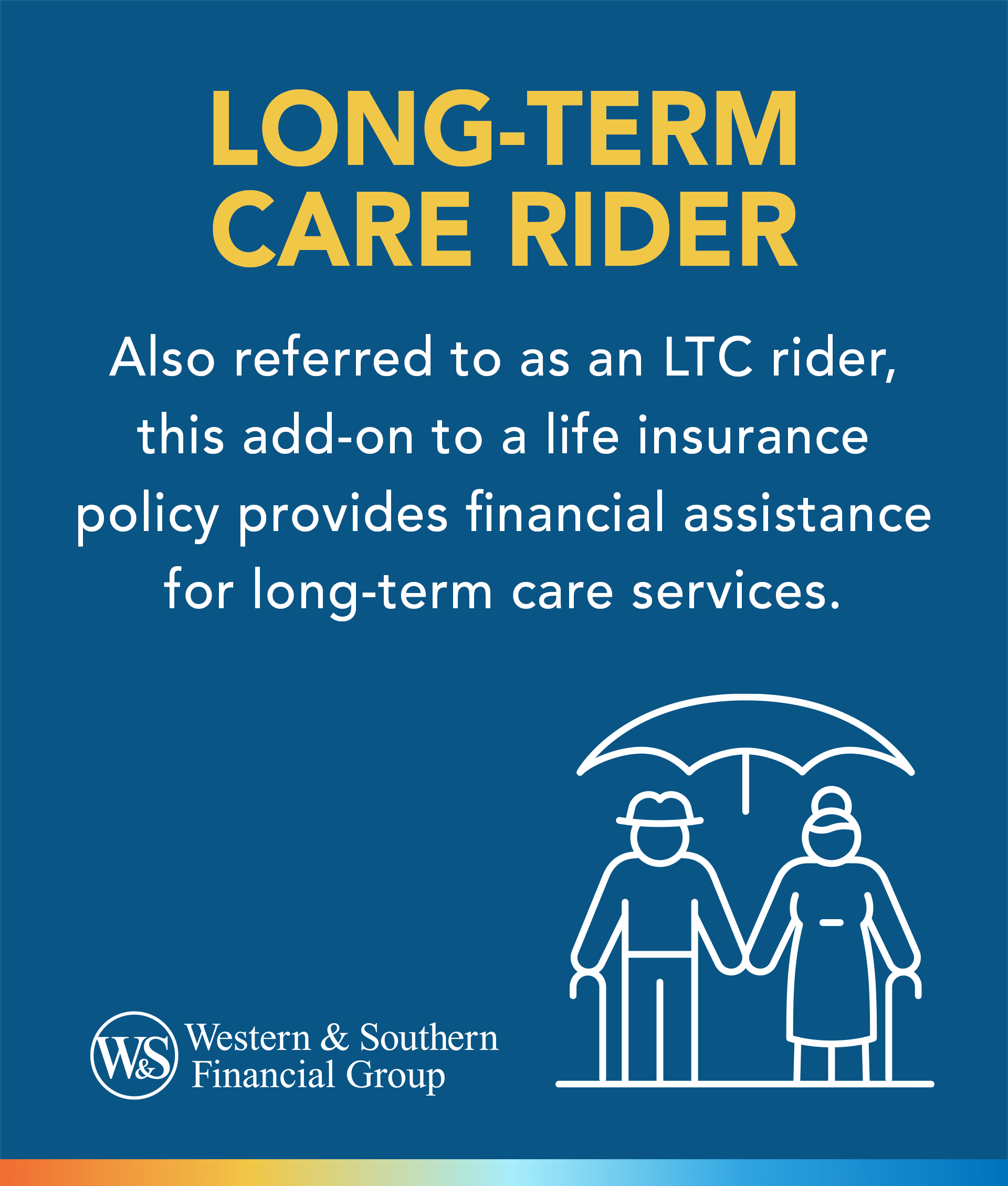
A long-term care rider is an optional addition to a life insurance policy that provides access to funds for long-term care services. It essentially allows you to accelerate a portion of your life insurance policy’s death benefit to cover eligible long-term care expenses.
Here’s how it typically works:
- Triggering the Rider: The rider is activated when the insured individual is certified as chronically ill, meaning they are unable to perform at least two of the six activities of daily living (ADLs) – bathing, dressing, eating, toileting, continence, and transferring – or require substantial supervision due to cognitive impairment.
- Benefit Payments: Once triggered, the rider provides a stream of payments to help cover the costs of long-term care. The amount and frequency of these payments are determined by the specific terms of the rider.
- Impact on Death Benefit: The amount paid out through the long-term care rider reduces the death benefit that will be paid to your beneficiaries upon the insured’s death.
Types of Long-Term Care Riders
There are several types of long-term care riders available, each with its own features and benefits. Some common types include:
- Indemnity Riders: These riders provide a fixed daily or monthly benefit amount, regardless of the actual cost of care.
- Reimbursement Riders: These riders reimburse you for actual long-term care expenses, up to a certain limit.
- Extension of Benefits Riders: These riders extend the benefit period of the long-term care rider, providing coverage for a longer duration.
- Hybrid Riders: These riders combine features of both indemnity and reimbursement riders, offering a fixed benefit amount with the option to be reimbursed for additional expenses.
Why You May Need a Long-Term Care Rider
There are several reasons why you may want to consider adding a long-term care rider to your life insurance policy:
- Rising Cost of Long-Term Care: The cost of long-term care is increasing rapidly. A long-term care rider can help you cover these costs without depleting your savings or relying on family members for financial assistance.
- Limited Coverage from Other Sources: Traditional health insurance and Medicare typically do not cover long-term care expenses. Medicaid may provide coverage, but it is subject to strict income and asset requirements.
- Protection of Assets: Long-term care expenses can quickly deplete your assets, leaving you with little to pass on to your heirs. A long-term care rider can help protect your assets by providing a dedicated source of funds for long-term care.
- Flexibility and Control: Long-term care riders offer flexibility and control over your care options. You can use the benefits to pay for care in your home, in an assisted living facility, or in a nursing home, depending on your needs and preferences.
- Tax Advantages: In some cases, the benefits received from a long-term care rider may be tax-free, providing additional financial relief.
- Peace of Mind: Knowing that you have a long-term care rider in place can provide peace of mind, knowing that you have a plan to address your long-term care needs.
Benefits of Long-Term Care Riders
- Affordability: Long-term care riders are generally more affordable than stand-alone long-term care insurance policies.
- Flexibility: Long-term care riders can be used to pay for a variety of long-term care services, including home care, assisted living, and nursing home care.
- Tax Advantages: In some cases, the benefits received from a long-term care rider may be tax-free.
- Guaranteed Issue: Some life insurance policies with long-term care riders offer guaranteed issue, meaning that you cannot be denied coverage based on your health.
Potential Drawbacks of Long-Term Care Riders
- Reduced Death Benefit: The amount paid out through the long-term care rider reduces the death benefit that will be paid to your beneficiaries.
- Limited Coverage: Long-term care riders may not provide as much coverage as stand-alone long-term care insurance policies.
- Eligibility Requirements: To be eligible for benefits, you must meet certain eligibility requirements, such as being unable to perform at least two of the six activities of daily living.
- Policy Complexity: Life insurance policies with long-term care riders can be complex, and it is important to understand the terms and conditions of the policy before purchasing it.
Who Should Consider a Long-Term Care Rider?
A long-term care rider may be a good option for individuals who:
- Are concerned about the rising cost of long-term care.
- Do not have long-term care insurance.
- Want to protect their assets from the costs of long-term care.
- Want flexibility and control over their care options.
- Want to provide peace of mind for themselves and their families.
How to Choose a Long-Term Care Rider
When choosing a long-term care rider, it is important to consider the following factors:
- Benefit Amount: How much coverage do you need? Consider the cost of long-term care in your area and the potential duration of your care needs.
- Benefit Period: How long will the benefits be paid? Choose a benefit period that is long enough to cover your potential care needs.
- Elimination Period: How long must you wait before benefits begin? A shorter elimination period will result in higher premiums.
- Type of Rider: Which type of rider is best for you? Consider the pros and cons of indemnity, reimbursement, and hybrid riders.
- Policy Features: What other features are important to you? Some policies offer inflation protection, restoration of benefits, and other valuable features.
- Insurance Company: Choose a reputable insurance company with a strong financial rating.
Alternatives to Long-Term Care Riders
If a long-term care rider is not the right fit for you, there are other options to consider, such as:
- Long-Term Care Insurance: Stand-alone long-term care insurance policies provide comprehensive coverage for long-term care expenses.
- Health Savings Account (HSA): HSAs can be used to save for future healthcare expenses, including long-term care.
- Annuities: Some annuities offer long-term care benefits or can be used to generate income to pay for long-term care expenses.
- Self-Funding: You can choose to self-fund your long-term care expenses by saving and investing for the future.
Conclusion
Long-term care riders can be a valuable tool for protecting yourself from the financial risks of long-term care. They offer an affordable and flexible way to access funds for long-term care services while still providing a death benefit for your beneficiaries. However, it is important to carefully consider the terms and conditions of the policy before purchasing it and to compare it to other options, such as stand-alone long-term care insurance. By understanding your needs and exploring your options, you can make an informed decision about how to best prepare for your long-term care needs.
It is always a good idea to consult with a qualified financial advisor to discuss your individual circumstances and determine the best course of action for you. They can help you evaluate your needs, compare different options, and make informed decisions about your long-term care planning.